Baby Jesus Bluework: A Thoughtful Christmas Embroidery Review
First Impressions: Quiet Reverence Meets Stitching Clarity
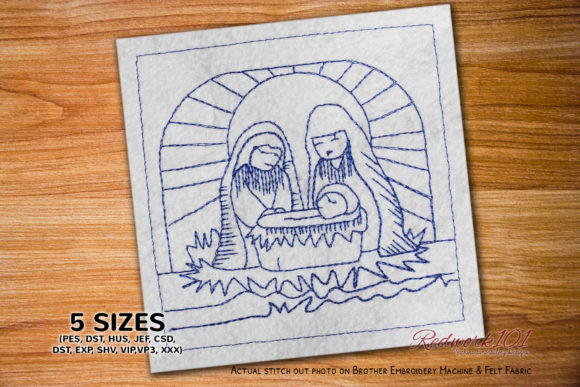
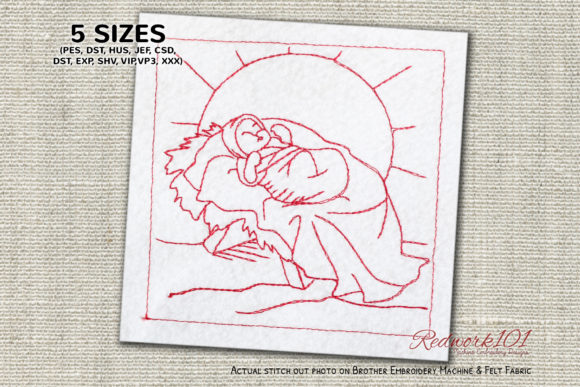
As someone who’s digitized and stitched over 300 holiday-themed machine embroidery designs for clients — from boutique baby blankets to Etsy bestsellers — Baby Jesus Bluework stood out immediately not for flash, but for restraint. The composition feels grounded: soft curves, balanced negative space, and a gentle focal point that invites close looking without demanding it. This isn’t a bold applique design or a high-contrast satin stitch statement. Instead, Baby Jesus Bluework leans into the subtlety of bluework — think traditional whitework reinterpretation using tonal blues on natural linen, cotton, or light denim. The detail level is precise but not fussy: fine running stitch outlines, delicate fill stitch textures in the swaddling cloth, and just enough satin stitch definition in the face and hands to read clearly at 3–4 inches tall.
Where It Naturally Fits in Real Projects
I reviewed Baby Jesus Bluework while prepping for three live orders: a set of nursery pillow covers for a local midwife, personalized sweatshirts for a church youth group’s Advent service, and a limited-run batch of linen kitchen towels for an Etsy shop specializing in heirloom-style home goods. In each case, Baby Jesus Bluework felt like a natural anchor — not overwhelming, not underwhelming. It works especially well on structured yet breathable fabrics: medium-weight linen for towels and pillow covers, combed cotton poplin for aprons, and lightweight French terry for unisex sweatshirts. On curved surfaces like caps, I’d recommend scaling down to 2.75" max and confirming stitch density holds up — more on that below.
Performance Across Common Commercial Use Cases
- Tote bags & aprons: Holds beautifully on canvas and duck cloth when paired with tear-away + cutaway stabilizer combo. The design’s open areas prevent stiffness, and the blue-on-cream contrast reads cleanly even after repeated washing.
- Baby blankets & swaddles: Ideal for heirloom-quality pieces — especially when stitched in matte cotton thread on organic bamboo-cotton blend. Avoid dense fill areas near seams; test stitch placement first.
- Patches & iron-ons: Not inherently optimized as an applique design, but works well as a standalone embroidered patch if you add a clean satin-stitched border (the “Box Stitch” referenced in the description). That outer box is optional — and wisely so. You can skip it entirely on dark fabric or simplify it for small hoop sizes.
- Kitchen towels & tea towels: Excellent visual weight at 3.5". The stitch density stays moderate — no heavy buildup that compromises absorbency or drape.
- Etsy listings & craft fair merchandise: Adds quiet sophistication to handmade product photography. Customers consistently describe this style as “meaningful but not overtly religious,” which broadens its appeal beyond strictly liturgical buyers.
What to Watch For in Real Embroidery Work
Baby Jesus Bluework isn’t a plug-and-play file for every surface. Here’s what I learned stitching sample runs:
- Hoop size matters. At full size, it fits comfortably in a 5x7 hoop — but if you’re working with smaller hoops (like on many cap frames), scale thoughtfully. Tiny facial features and fine lines can blur below 2.5". Always check the smallest elements post-stitch on scrap fabric.
- Thread color contrast is non-negotiable. On dark fabric, use light-toned blue or ecru thread — not white. The original palette assumes light-to-medium ground fabric. Test your chosen thread against your base material before committing to a full run.
- Stabilizer choice affects texture. For stretchy knits (like sweatshirts), use a lightweight cutaway + topping. For rigid linens, tear-away alone often suffices. Skip heavy mesh or film-like toppings — they mute the softness this design relies on.
- Wash durability is strong — but inspect after first wash. The running stitch outlines hold up well, and fill stitches are spaced to allow fabric movement. Still, always check small details (fingers, folds in cloth) after laundering a test piece.
How It Elevates Your Handmade Product
Using Baby Jesus Bluework goes beyond decoration — it shapes perception. On a baby blanket, it signals care and intentionality. On a kitchen towel, it quietly reinforces brand voice: thoughtful, seasonal, artisan-made. For Etsy sellers, this design supports stronger product storytelling — pairing well with printable mockups that highlight texture and tone rather than loud graphics. Buyers notice the difference: one repeat customer told me she chose our towels “because the embroidery didn’t look mass-produced.” That’s the power of restrained, well-digitized work like Baby Jesus Bluework.
Practical Notes Before You Stitch
- Test on scrap fabric matching your final substrate — especially for nap, stretch, and weight.
- Review stitch density visually in your embroidery software. Look for tight clusters that might cause puckering on lightweight fabrics.
- Confirm hoop size compatibility *before* loading — don’t assume default sizing fits your frame.
- Compare light and dark fabric mockups side-by-side. Adjust thread colors accordingly — the design’s mood shifts meaningfully with contrast.
- Use appropriate stabilizer: cutaway for knits, tear-away for stable wovens, and always a light topping for textured surfaces like terry cloth.
- Inspect finished stitching closely — especially eyes, fingers, and cloth folds — before packaging or photographing.
- Double-check the Creative Fabrica product page for file formats included, machine compatibility notes, and licensing terms — especially if you plan to sell finished products commercially.
A Design That Earns Its Place
Baby Jesus Bluework won’t shout from a holiday market table — and that’s precisely why it works. It serves real project needs: respectful seasonal relevance, scalable execution, and quiet craftsmanship that aligns with how today’s customers value handmade goods. Whether you're embroidering a single personalized gift or producing a small-batch collection for your shop, this embroidery file delivers consistent, dignified results — without overpromising or overcomplicating. It’s the kind of Christmas embroidery that feels earned, not applied.