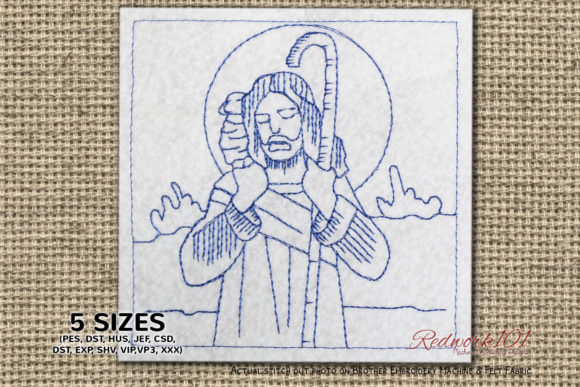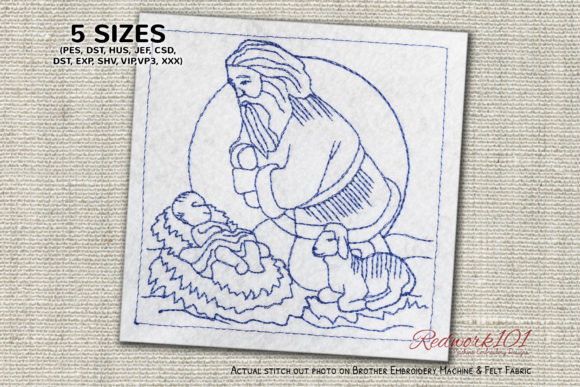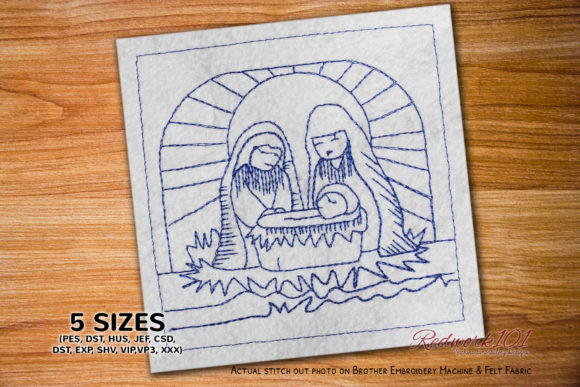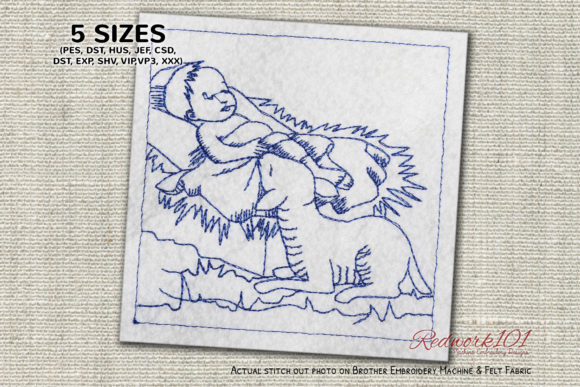
Baby Jesus with Sheep Design
A Thoughtful Review for Small Business Merch & Branded Patches
As an embroidery designer who’s developed hundreds of commercial designs for cafés, boutiques, bakeries, florists, and handmade brands, I approach every new machine embroidery design with two questions: “Will this strengthen my client’s brand identity?” and “Will it hold up—visually and structurally—across real-world applications?” That’s why Baby Jesus with Sheep Design caught my attention. It’s clearly rooted in the Christmas category, but its potential goes far beyond seasonal decor—it’s a quiet, warm visual anchor that can elevate small business merch when used intentionally.
First Impression: Gentle, Timeless, and Professionally Handmade
Right away, Baby Jesus with Sheep Design reads as classic—not fussy, not overly ornate, and definitely not cartoonish. The implied use of box stitch (noted as optional in the description) suggests thoughtful construction: clean outlines, balanced negative space, and a composition that leans into sincerity over spectacle. That makes it ideal for businesses that value authenticity—think a family-run bakery offering holiday gingerbread kits, a local florist wrapping nativity-themed bouquets, or a pet-friendly boutique launching a “Shepherd & Lamb” limited-edition tote line. It feels handmade without sacrificing polish, and that duality is gold for small business branding.
Where It Shines in Real Business Use
Baby Jesus with Sheep Design performs exceptionally well across high-impact branded touchpoints:
- Embroidered patches: Its centered, symmetrical layout and moderate detail translate beautifully to woven or chenille patches—perfect for aprons, denim jackets, or gift-shop merchandise.
- Staff uniforms & aprons: As a chest logo or sleeve accent, it conveys warmth and care—ideal for holiday pop-ups, café baristas serving spiced cider, or craft studio instructors greeting guests.
- Cap embroidery: At 2.5–3 inches wide, it maintains clarity on front panels without crowding. The sheep’s rounded forms and soft contours avoid harsh angles that distort on curved surfaces.
- Tote bag design & product packaging accents: When stitched onto natural canvas or linen totes, it adds artisanal gravitas—especially paired with minimalist typography like “Hand-Picked This Season” or “Made with Love in [City].”
- Etsy branding & handmade product tags: As a small embroidered label sewn into seam allowances or attached as a branded charm, it quietly signals intentionality and care—key trust signals for digital buyers.
Use With Intention: Key Considerations for Commercial Embroidery
This isn’t a one-size-fits-all file—and that’s a strength, not a limitation. Here’s where careful planning matters:
- Small patch sizes (under 2 inches): Test at 1.75” first. Delicate features like facial expression or wool texture may soften; simplify or adjust density if needed.
- Dark uniforms or textured fabric: Review thread color contrast closely. A cream or ecru thread on navy twill reads richer than stark white—and avoids glare under retail lighting.
- Frequent washing: Confirm stitch density aligns with durability needs. High-density fills hold better on aprons and work shirts, but balance with fabric breathability.
- The optional box stitch: Since the outer box color often differs unless integral to the design, decide early: Is the frame part of your brand’s visual language (e.g., matching your logo border)? Or does it distract from the central motif? You can skip it—and many small businesses should.
How It Builds Brand Identity & Customer Trust
In a marketplace flooded with generic clipart-style holiday motifs, Baby Jesus with Sheep Design stands out by feeling human-scaled and reverent—not promotional. For a small business, that distinction builds immediate credibility. Customers don’t just see “Christmas”—they sense story, values, and attention to detail. When stitched on a baker’s apron beside hand-lettered flour-dusted tags, it reinforces craftsmanship. On a boutique’s reusable gift bag, it becomes part of the unboxing experience—a tactile moment that encourages social sharing and repeat visits. That’s how embroidery moves beyond decoration into brand equity.
Practical Designer Notes Before You Stitch
Before committing to production—whether for your own shop or a client—run these checks:
- Test the Baby Jesus with Sheep Design embroidery file in black and white first. Does the silhouette read clearly? Are internal details legible without color cues?
- Check performance at your smallest intended size—especially for cap fronts or pocket accents.
- Review thread color recommendations against your fabric swatches. Contrast > brightness.
- Inspect spacing between elements. Sheep legs, folds in cloth, and baby’s outline must retain breathing room at scale.
- Confirm hoop size compatibility with your machines—and whether stabilizer choice (cutaway vs. tear-away) supports your base fabric.
- Always stitch a physical sample on the exact fabric you’ll use. Mockups lie; thread tension and fabric pull don’t.
- Create a printable mockup for client approval—showing placement, size, and thread palette side-by-side with their logo or other design assets.
- Verify commercial licensing status. Since this is intended for small business merch, custom apparel, and resale items, confirm the digital embroidery file permits commercial embroidery use.
Bottom line: Baby Jesus with Sheep Design isn’t just another Christmas embroidery file. It’s a versatile, emotionally intelligent asset—one that helps small businesses communicate care, continuity, and quiet confidence. Used with purpose, it transforms everyday items—totes, caps, aprons, patches—into meaningful extensions of brand voice. And in today’s market, that kind of resonance doesn’t get stitched—it gets remembered.