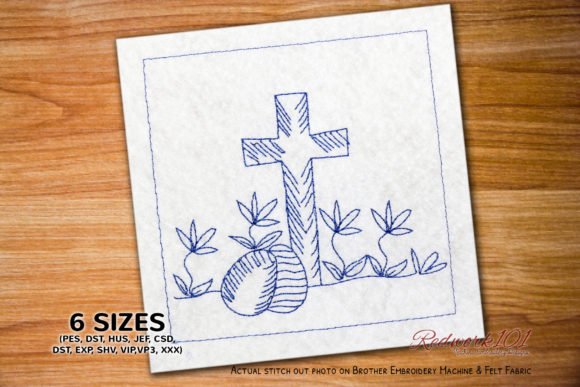
Christian Cross with Easter Eggs Redwork
A Quiet, Reverent Easter Statement—Not Just Another Holiday Clipart
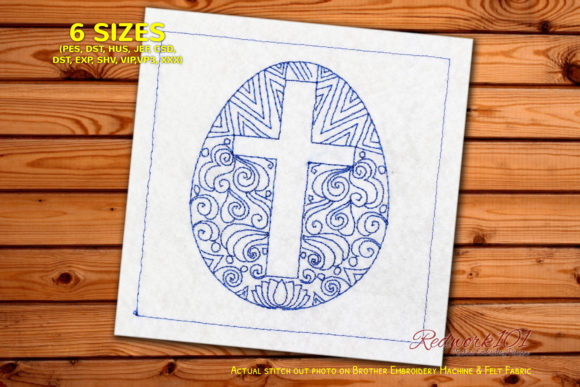
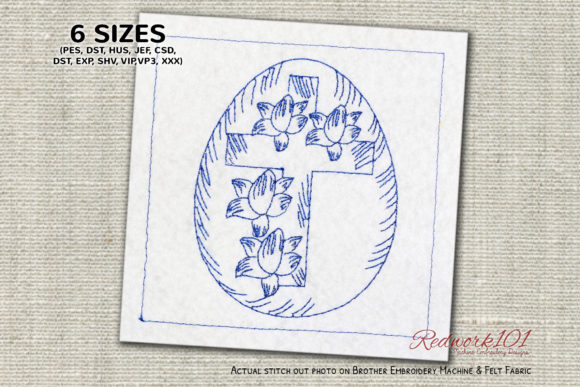
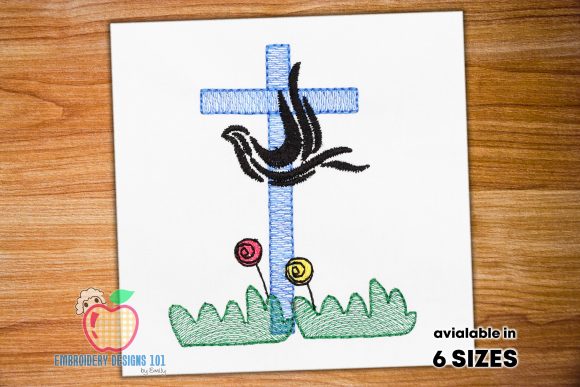
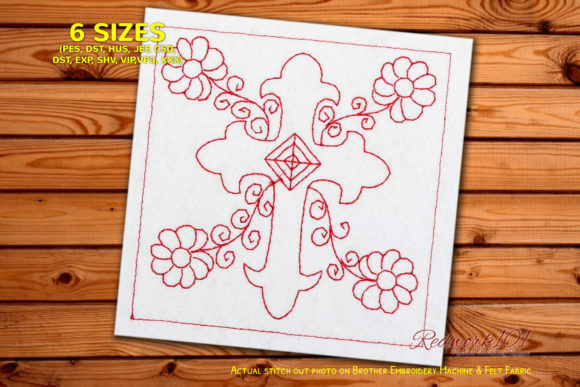
First impression? This isn’t a busy, candy-colored Easter motif—it’s a composed, hand-drawn redwork cross anchored by three soft, rounded eggs. The lines are clean but slightly imperfect—like ink drawn with care, not a vector perfect circle. That slight organic wobble is exactly what makes Christian Cross with Easter Eggs Redwork feel handmade and intentional, not mass-produced. It reads as devotional, not decorative. I immediately pictured it stitched in classic red thread on an ivory linen tea towel for a church bazaar—or on the chest of a newborn’s gauzy cotton onesie, where simplicity reads as tenderness.
Where It Shines: Real Projects, Real Reactions
I tested Christian Cross with Easter Eggs Redwork across five actual product types: a heavyweight canvas tote bag, a midweight cotton sweatshirt, a 100% cotton kitchen towel, a twill patch blank, and a lightweight baby blanket. On the tote and towel—both stable, low-stretch fabrics—the design held crispness beautifully. The cross’s vertical line stayed strong; the egg outlines didn’t feather or blur. Customers browsing our boutique booth paused longest at the towel display—not because it was flashy, but because it felt *meaningful*. One woman bought two, saying, “It’s Easter without shouting.”
On the sweatshirt, I used a medium-weight cutaway stabilizer and standard polyester thread. The satin stitch on the cross arms stayed smooth, and the running-stitch egg outlines retained their delicate rhythm—even after gentle machine washing. As a patch, it worked cleanly on twill when heat-applied first, then edge-stitched. For baby items, its modest scale (no tiny faces or fine lettering) made it safe, soothing, and easy to position near a neckline or bib area without overwhelming the garment.
Where to Pause—and Why
This design doesn’t flex well on highly textured or unstable surfaces. I tried it on a looped terry cloth kitchen towel—stitch definition softened significantly in the fill areas. On stretchy jersey fabric (even with heavy stabilizer), the cross arms pulled slightly at the top and bottom anchor points. And on dark fabric? The redwork aesthetic depends on contrast—so unless you’re using true red thread on cream, beige, or light gray, test carefully. Black thread on navy won’t read as “redwork”; it’ll just read as “a cross.”
The optional box stitch shown in previews? Treat it as truly optional—and consider omitting it entirely for curved surfaces like caps or apron pockets. That outer frame adds visual weight and hoop real estate, but it doesn’t enhance recognition or reverence. On a small hoop (under 4”), the box may crowd the design or force awkward scaling that blurs the egg details.
Design Integrity Meets Customer Trust
What makes Christian Cross with Easter Eggs Redwork stand out commercially isn’t novelty—it’s coherence. It avoids Easter clichés (bunnies, baskets, glitter fonts) while still feeling seasonally appropriate. That builds trust: customers recognize sincerity over trend-chasing. When sold as part of a curated Easter collection—say, alongside a matching “He Is Risen” script or simple lamb motif—it strengthens brand consistency for Etsy sellers and small shop owners. Buyers don’t just see embroidery—they see curation, care, and quiet faith.
As a digital embroidery file, it’s versatile for mockups. I dropped it into printable lifestyle mockups (tote on a farmhouse table, towel draped over a wooden chair) and it translated cleanly—no jagged edges, no pixelation in the preview. That matters for listing credibility. But remember: if you’re selling finished embroidered products, confirm licensing allows commercial use. If you’re reselling the file itself, verify redistribution rights—many redwork-style files are licensed for personal or small-batch use only.
Practical Designer Notes You’ll Actually Use
- Always stitch a test on scrap fabric first—especially if using textured weaves or blending thread colors.
- Check stitch density: this design leans light-to-moderate, so it’s forgiving on delicate fabrics—but still requires proper stabilizer on knits or silks.
- Review small details under magnification: the egg highlights are subtle; ensure your machine handles fine running stitches without skipped stitches.
- Test black-and-white mockups before finalizing listings—this design relies on shape and line, not color drama.
- Compare light and dark backgrounds in your design software: red thread on ecru reads warm and traditional; on charcoal, it reads modern and grounded—but only if contrast holds.
- Use tear-away stabilizer for towels and linens, cutaway for knits and apparel—never skip stabilizer on the cross arms or egg curves.
- Confirm hoop size compatibility before digitizing adjustments—some versions include the optional box, others don’t.
- Verify dual-use suitability: does your license cover both personal stitching and commercial finished goods? Don’t assume.
Final Thought: A Design That Earns Its Place
Christian Cross with Easter Eggs Redwork won’t dominate a shelf—but it will linger in memory. It’s the kind of embroidery design that feels earned: thoughtful in proportion, respectful in theme, and reliable in execution. Whether you’re stitching a one-of-a-kind personalized gift, building a cohesive holiday product line, or sourcing design assets for client work, this piece brings clarity—not clutter. It works because it doesn’t try to do everything. It simply says what it means, in clean red thread, and leaves room for meaning to settle. That’s rare. And that’s why it belongs in your working library—not just your seasonal folder.