Sacred Heart of Jesus Embroidery Design Review
First Impressions: Reverent, Clean, and Quietly Confident
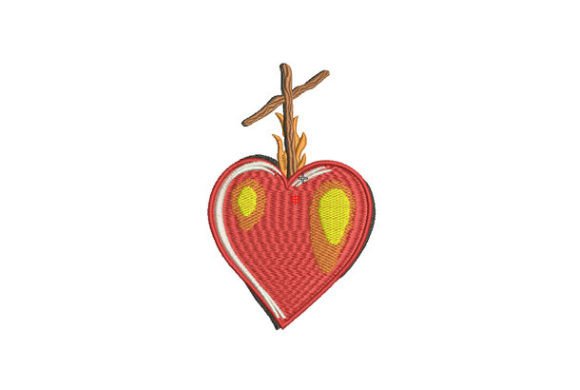
When I opened the Sacred Heart of Jesus embroidery file for the first time, what struck me wasn’t just the symbolism—but its quiet compositional balance. It’s not overly ornate or baroque, nor is it stripped-down to the point of abstraction. The heart sits centered, with gentle flames and a subtle cross above—enough detail to read clearly at 3–4 inches, but no so much that small-scale stitching collapses into mush. As a designer who regularly tests religious embroidery for baptism gifts and nursery decor, I appreciated how immediately Sacred Heart of Jesus feels both devotional and wearable—not like a church banner, but like something you’d stitch onto a soft cotton onesie or a linen tea towel for a godmother’s gift.
A Real-World Test: Stitching It on a Baptism Tote Bag
Last week, I used Sacred Heart of Jesus on a natural canvas tote for a client’s baby dedication event. The bag was unbleached, medium-weight, and slightly textured—ideal for showing off satin-stitched outlines and clean fill areas. I chose a light rose thread for the heart, white for the flames, and charcoal gray for the cross. With a medium-weight cutaway stabilizer, the design held beautifully through hooping and stitching. No puckering, no thread breaks—even across the curved lower edge of the heart, where many designs fray or skip. That tells me Sacred Heart of Jesus has thoughtful stitch direction and balanced density. It didn’t feel “heavy” on the fabric, which matters when you’re embroidering baby items or lightweight apparel.
Where It Shines—and Where It Needs Careful Planning
Sacred Heart of Jesus works especially well for:
- Custom apparel: Sweatshirts, crewneck tees, and lightweight hoodies—especially on left-chest placement where its vertical symmetry reads cleanly.
- Baby embroidery: On burp cloths, receiving blankets, or embroidered bibs (use soft, low-lint stabilizer and test on pre-washed fabric).
- Embroidered patch: It scales nicely to 2.5–3.5 inches and holds definition when heat-applied or sewn on.
- Holiday embroidery: Think Advent calendars, Lenten kitchen towels, or Easter pillow covers—its warmth reads differently in seasonal contexts without needing redesign.
- Etsy seller & small shop product: Paired with minimalist typography (“Baptism 2024” or “Beloved”) it creates cohesive, meaningful digital embroidery bundles.
But here’s where attention matters:
- Small hoop sizes: Below 3 inches, the flame tips and cross base start losing nuance. If you’re stitching on a cap or wristband, confirm the smallest recommended size before cutting.
- Textured or stretchy fabric: On ribbed knits or jersey, use tear-away + light cutaway combo and reduce top tension slightly—fill areas can pull if stabilizer isn’t secure.
- Dark fabric: The design relies on contrast. Test thread colors in natural light—not just on screen. A pale gold or ivory works better than stark white on navy or charcoal.
- Curved surfaces: Caps and apron pockets require re-hooping finesse. The heart’s rounded shape adapts well, but avoid placing the center point directly over a seam ridge.
What It Adds to Your Handmade Product—Beyond the Obvious
Using Sacred Heart of Jesus isn’t just about adding a motif—it shifts how your finished product is received. Customers notice intentionality. A baptism onesie with this design doesn’t feel mass-produced; it feels chosen, reverent, and quietly personal. For Etsy sellers, that translates to stronger buyer engagement: longer view times, saved listings, and repeat customers asking for matching towels or keepsake boxes. For craft fairs or boutique branding, it supports a consistent visual language—soft, sacred, and handmade—not kitschy or generic. And because the composition avoids tiny lettering or micro-details, it maintains professionalism even when stitched by intermediate-level machine operators.
Designer Notes You’ll Actually Use
Before stitching Sacred Heart of Jesus on your next project, do these five things:
- Test on scrap fabric—same weight, same pre-wash status as your final piece. Watch how the flames settle and whether the heart outline stays crisp.
- Check thread color contrast in both daylight and indoor lighting. What reads softly on screen may vanish on dark linen.
- Review stitch density visually in your embroidery software. If fill areas look solid black instead of layered texture, you may need to adjust underlay or reduce density for breathable fabrics.
- Confirm hoop size compatibility with your machine and intended placement—especially for caps or sleeve cuffs.
- Use proper stabilizer: Cutaway for stable wovens, tear-away + light fusible for knits, and water-soluble film for delicate lace overlays.
Also—don’t skip the licensing check. Since this is a machine embroidery design marketed for personal and commercial use, verify whether resale of finished items (like embroidered sweatshirts or patches) is permitted, and whether redistribution of the digital embroidery file is restricted. Many craft businesses get tripped up here—not by the design itself, but by assumptions about usage rights.
Final Thought: A Design That Serves Its Purpose
Sacred Heart of Jesus isn’t flashy. It doesn’t chase trends. But as a working embroidery designer, I value that. It serves its purpose—bringing reverence, clarity, and quiet strength to real products people give, keep, and cherish. Whether you’re an Etsy seller building a faith-based collection, a small shop owner curating baptism gifts, or a maker stitching personalized keepsakes, this design earns its place in your library because it stitches well, reads meaningfully, and honors the weight of what it represents—without overcomplicating the craft.