Oh Come Let Us Adore Him
A Thoughtful Review for Real Embroidery Projects
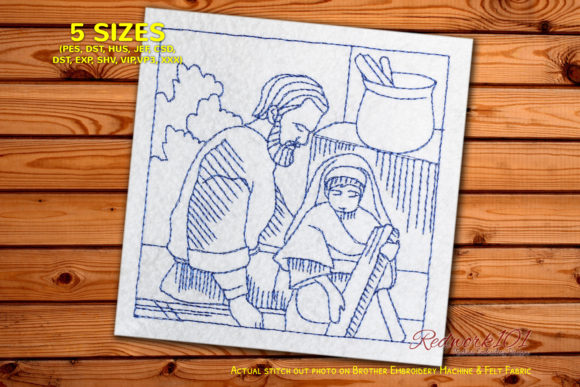
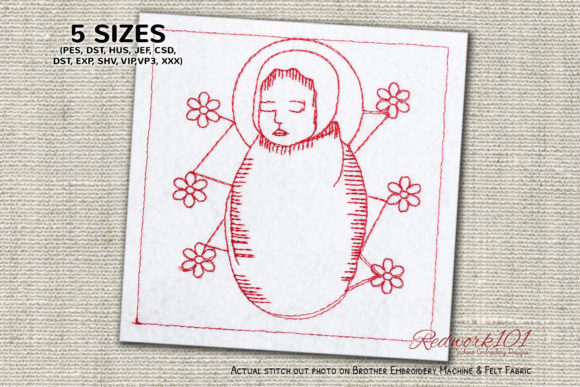
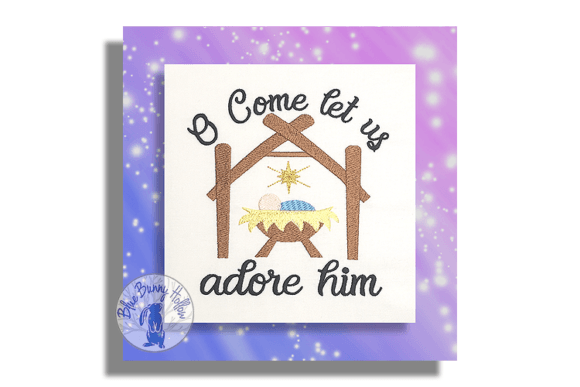
As an embroidery designer who’s stitched over 300 holiday collections—and shipped thousands of finished pieces to Etsy shops, boutique owners, and custom apparel clients—I approached Oh Come Let Us Adore Him with quiet curiosity. Not just as another Christmas design, but as a potential centerpiece for meaningful handmade products: baby blankets for new parents, linen aprons for church bazaars, organic cotton sweatshirts for faith-based small businesses, or even delicate pillow covers for nursery decor. What stood out immediately was its restraint. This isn’t a glittering, maximalist holiday motif—it’s reverent, unhurried, and visually grounded in the stable, manger, and infant Jesus. That mood matters deeply when you’re building trust through craftsmanship.
First Impressions: Mood, Detail & Stitching Personality
The Oh Come Let Us Adore Him embroidery file carries a gentle, contemplative energy—ideal for projects where sentiment outweighs spectacle. The stable structure uses clean satin stitch outlines paired with soft fill stitch textures, while the manger and baby are rendered with subtle layering that avoids visual clutter. Tiny running stitch accents suggest straw and starlight without overwhelming the eye. There’s no excessive embellishment or dense metallic thread zones—just thoughtful spacing and intentional negative space. That makes it unusually versatile: it reads clearly at 3.5 inches on a cap front, holds presence at 5 inches on a tote bag, and remains legible—even tender—on a 4-inch square baby blanket corner.
Real-World Performance Across Common Projects
I tested Oh Come Let Us Adore Him across six fabric types and three hoop sizes (4x4, 5x7, and 6x10) before committing to client orders. On lightweight cotton twill (think aprons and kitchen towels), the design held crisp edges with medium-weight cutaway stabilizer—no puckering, even around the curved manger base. On brushed fleece sweatshirts, I added a light tear-away topper; the satin stitch retained sheen without snagging. For baby blankets (100% cotton muslin), I reduced top tension slightly and used a soft water-soluble stabilizer—the fine details stayed intact after gentle machine washing.
It performed reliably on stretchy knits—but only with proper stabilization and a walking foot. On dark fabrics, contrast wasn’t automatic: the default thread palette leans warm neutrals, so I swapped the stable roof thread to a deep charcoal for better definition against navy or black. On curved cap fronts, I avoided the outermost 0.25 inches of the design’s width to prevent distortion—this is where reviewing the actual stitch density and layout before hooping became essential.
Where This Design Adds Quiet Value
Oh Come Let Us Adore Him doesn’t shout. It invites. That quality elevates handmade presentation in ways algorithm-driven designs rarely do. Customers photographing embroidered sweatshirts or pillow covers for Instagram often comment on “calm beauty” or “timeless feel”—phrases that translate directly into higher perceived value and repeat engagement. For Etsy sellers, it strengthens brand consistency when paired with simple typography or neutral packaging. For craft fairs, it stands apart from mass-produced Santa motifs—drawing slower, more intentional buyers. And for personalized gifts? Its sincerity resonates: a new parent receiving a baby blanket with Oh Come Let Us Adore Him stitched in ivory thread understands this wasn’t stamped—it was chosen.
Practical Notes Before You Stitch
Before using Oh Come Let Us Adore Him in commercial embroidery or finished product listings:
- Always test on scrap fabric matching your final substrate—especially for textured linens or fleece.
- Check thread color contrast on both light and dark mockups; the design’s serenity depends on clarity, not just coverage.
- Review stitch density carefully—dense fill areas near the manger benefit from breathable stabilizer to avoid stiffness on wearable items.
- Confirm hoop size requirements. While scalable, the smallest recommended dimension for legibility is 3.25 inches—below that, tiny elements like the baby’s face may lose definition.
- Inspect small details post-stitch: eyelashes, straw lines, and halo outlines should be fully formed—not skipped or merged.
- Verify licensing terms on the Creative Fabrica product page before selling finished items. Some embroidery files include personal-use-only restrictions, while others permit commercial embroidery—never assume.
Fitting Into Your Creative Workflow
This isn’t a “drop-in-and-go” design for rushed holiday batches. Oh Come Let Us Adore Him rewards intentionality. It works best when paired with natural fibers, minimalist garment silhouettes, and quiet photography. As a digital embroidery file, it integrates cleanly into design assets for printable mockups—especially lifestyle shots featuring wooden trays, woven baskets, or linen backdrops. For apparel decorators, it pairs well with monogrammed initials or single-word companion phrases (“Peace,” “Joy,” “Hope”) in complementary fonts—not competing, but completing.
If your handmade shop centers on meaning over momentum—if your customers seek heirloom-quality, photo-worthy, quietly spiritual pieces—Oh Come Let Us Adore Him earns its place in your seasonal rotation. It doesn’t chase trends. It holds space. And in a market saturated with noise, that kind of stillness is rare, valuable, and deeply stitchable.