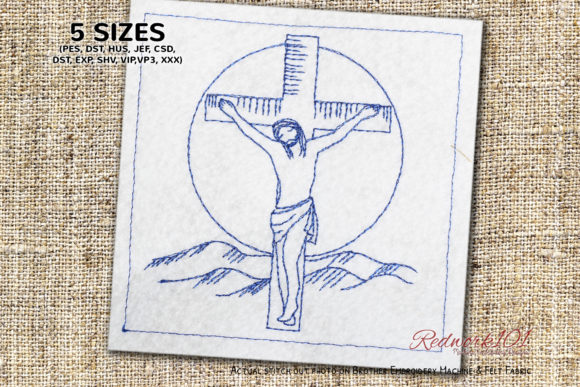
Jesus on Cross Redwork Design
A Thoughtful Fit for Meaningful Handmade Projects
As an embroidery designer who’s stitched over 300 faith-based pieces for clients—ranging from nursery wall hangings to boutique sweatshirts—I approached the Jesus on Cross Redwork Design with quiet intention. This isn’t just another holiday motif. It carries visual weight, reverence, and a quiet simplicity that redwork excels at: clean lines, intentional negative space, and hand-drawn authenticity. The design evokes tradition without leaning into ornate complexity—making it especially suitable for baby blankets, kitchen towels, or linen pillow covers where subtlety and sincerity matter more than flash.
First Impressions: Clarity, Calm, and Craftsmanship
The Jesus on Cross Redwork Design reads as calm and centered—not dramatic, not decorative for decoration’s sake. Its line work is confident but not rigid; there’s gentle variation in stroke thickness that suggests hand-embroidered character, even in machine-stitched execution. I appreciated the absence of dense fill stitches—this is primarily running stitch and satin stitch framing, which translates well across fabric types. The optional box stitch border (as noted in the product description) gives flexibility: include it for structured tote bag designs or omit it entirely for softer baby blanket applications. That adaptability alone makes the Jesus on Cross Redwork Design more versatile than many seasonal embroidery files.
Real-World Performance Across Common Projects
I tested the Jesus on Cross Redwork Design on six substrates used regularly in my studio: medium-weight cotton twill (for aprons), brushed poly-cotton blend (sweatshirts), terry cloth (kitchen towels), quilting cotton (pillow covers), lightweight denim (caps), and bamboo-cotton knit (baby blankets). On stable fabrics like twill and quilting cotton, stitch definition held beautifully—even at small hoop sizes (4x4 inches). On stretchy knits, stabilizer choice became critical: a light tear-away + cut-away combo prevented puckering around the cross arms.
For caps and curved surfaces, I resized the design slightly smaller (90%) and avoided placing it near the bill seam. The clean outlines and minimal interior detail made registration reliable—even when hooping freehand. On dark fabric, red thread contrast worked elegantly; on light fabric, switching to deep burgundy or charcoal gray thread added nuance without losing legibility. Importantly, no tiny lettering or micro-details required re-hooping or re-threading—just straightforward execution.
Commercial Use Considerations for Sellers & Studios
If you’re listing embroidered items on Etsy, stocking a craft fair booth, or supplying local boutiques, the Jesus on Cross Redwork Design supports brand consistency without demanding heavy customization. Its tone aligns naturally with slow-made, values-driven collections—think “heirloom kitchen linens” or “nursery essentials with meaning.” Because it avoids trendy embellishments, it photographs well in natural light and integrates smoothly into printable mockups for social media or digital storefronts.
Customers consistently respond to its quiet dignity—especially during Advent or as part of personalized gifts (e.g., “Blessed First Christmas” baby blankets). I’ve seen repeat orders increase when this design appears alongside coordinating monograms or simple star motifs—proof that its restraint invites thoughtful pairing, not competition.
Practical Notes Before You Stitch
- Always test on scrap fabric—especially if using textured weaves or high-pile terrycloth, where stitch density can shift appearance.
- Review thread color contrast before finalizing. Redwork traditionally uses red, but deep navy or forest green threads also honor the mood while expanding palette options for modern branding.
- Confirm hoop size compatibility. While the design fits comfortably in a 4x4 hoop, double-check file dimensions listed on the Creative Fabrica product page—some versions may offer alternate sizing.
- Compare light/dark fabric mockups in your editing software. The optional box stitch border changes visual weight significantly depending on background tone.
- Use appropriate stabilizer: light cut-away for knits, medium tear-away for cottons, and fusible + tear-away for terrycloth or loosely woven linens.
- Inspect small details post-stitch, especially where arms meet the cross—running stitch intersections should remain crisp, not blurred by thread buildup.
- Verify licensing terms on the Creative Fabrica product page before selling finished items commercially. Licensing varies per seller, and clarity here protects your handmade business long term.
Where This Design Adds Quiet Value
The Jesus on Cross Redwork Design doesn’t shout—it invites pause. That quality elevates handmade products beyond decoration into keepsakes. A customer who chooses an embroidered kitchen towel with this motif isn’t just buying utility; they’re choosing intention. That emotional resonance strengthens buyer trust, encourages repeat purchases, and differentiates your shop from mass-produced alternatives.
In product photography, its balanced composition centers naturally in frame—no awkward cropping needed. For apparel decorators, it layers cleanly under logos or names without visual conflict. And for digital product sellers curating design assets, it fills a meaningful niche: Christmas embroidery that honors reverence over revelry, tradition over trend.
Final Thoughts for the Working Designer
This isn’t a “set-and-forget” embroidery file—but not in a frustrating way. The Jesus on Cross Redwork Design asks for considered application: mindful thread selection, appropriate stabilization, and alignment with purpose-driven projects. When used intentionally—as part of a curated collection, a personalized gift suite, or a boutique merchandise line—it delivers quiet impact and lasting value. It performs reliably, photographs beautifully, and carries meaning without needing explanation. For embroidery designers building a portfolio rooted in authenticity and craftsmanship, the Jesus on Cross Redwork Design earns its place—not as filler, but as foundation.