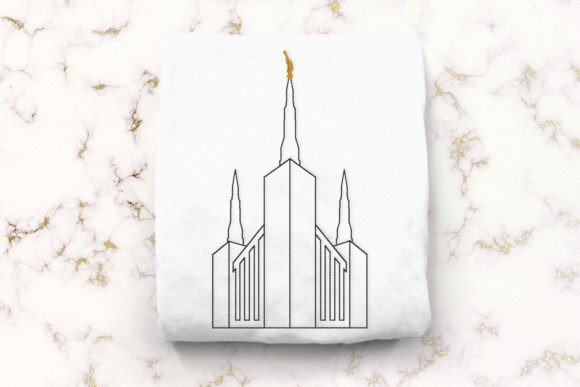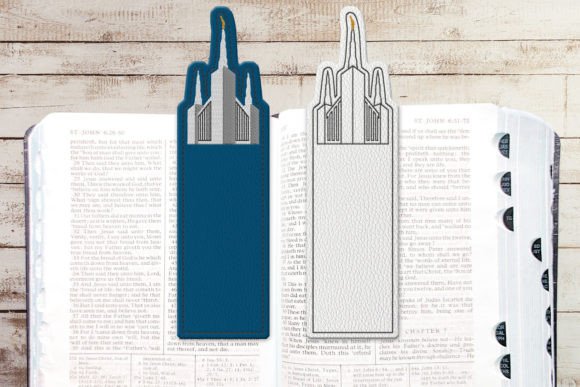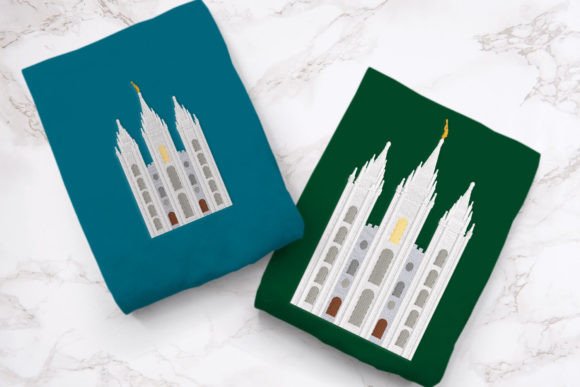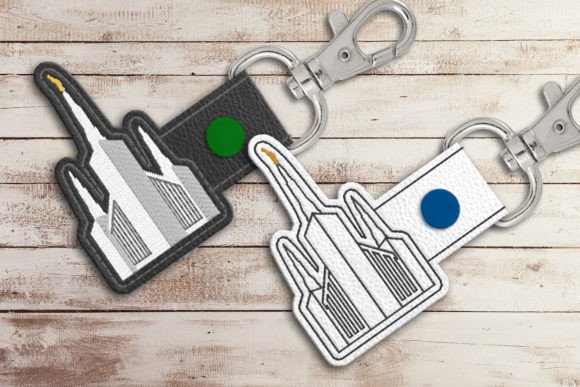
LDS Portland Oregon Temple ITH Key Fob
A Thoughtful Design Review for Small Business Merchandise & Branded Patches
As an embroidery designer who’s developed hundreds of commercial designs for cafés, boutiques, studios, and faith-based brands, I approached the LDS Portland Oregon Temple ITH Key Fob with both professional curiosity and practical intent. This isn’t just another decorative motif—it’s a meaningful symbol with real business potential. Right away, the title signals clarity: it’s an in-the-hoop (ITH) design built for functional use on felt, centered on a recognizable landmark—the Portland Oregon Temple of The Church of Jesus Christ of Latter-day Saints. That specificity matters. It tells me this design was created with intentionality, not generic ornamentation.
First Impression: Elegant, Reverent, and Professionally Grounded
The LDS Portland Oregon Temple ITH Key Fob reads as elegant and classic, not flashy or trendy—ideal for businesses that value sincerity, craftsmanship, and quiet confidence. Think florists honoring local heritage, bakeries with spiritual roots, or creative studios serving faith-minded communities. It avoids cartoonish simplification while remaining accessible at small scale. There’s no forced playfulness or over-stylization—just clean architectural reverence translated into stitchable form. That balance makes it unusually versatile across small business merch: from apron embroidery in a Portland coffee roastery to cap embroidery for a volunteer-driven community garden group.
Real-World Performance Across Business Applications
In practice, the LDS Portland Oregon Temple ITH Key Fob shines where meaning meets utility. As an embroidered patch, it holds up beautifully when fused or sewn onto tote bags, staff uniforms, or boutique packaging. Its ITH construction means it arrives fully finished—no separate backing or edging needed—making it ideal for high-turnover production like event merch or seasonal customer gifts. On aprons and work shirts, it reads clearly at 2.5–3 inches wide, offering instant visual recognition without overwhelming the garment.
For cap embroidery, placement is key: center front works best on structured caps, but avoid curved bill surfaces unless you’ve tested stabilizer hold. As a sleeve detail on crewneck tees or flannel shirts, it adds subtle brand distinction—especially for handmade product lines that lean into local identity. And because it’s designed for felt, it transitions naturally to custom apparel tags, product labels, or even stitched-on gift card holders in retail settings.
Where to Use with Intention—Not Assumption
Like any thoughtful machine embroidery design, the LDS Portland Oregon Temple ITH Key Fob has boundaries worth honoring. Avoid scaling it below 1.75 inches—fine temple spire details and delicate lettering may collapse under stitch density pressure. On dark uniforms or textured fabrics like canvas or heavy twill, test thread color contrast first: light ecru or silver metallics can lift the design; charcoal gray or navy threads ground it respectfully. Curved surfaces (like cap fronts or rounded tote handles) require extra stabilizer support—don’t skip cutaway backing here.
Also note: frequent washing demands attention. Since it’s intended for felt, confirm whether your final application fabric supports long-term durability. A bakery apron gets washed daily—so if you’re adapting the LDS Portland Oregon Temple ITH Key Fob beyond its original key fob context, choose high-retention thread and reinforce edges during digitizing review.
Brand Identity Impact: Trust, Recognition & Visual Consistency
This design quietly strengthens brand identity by anchoring merchandise in place and purpose. For a Portland-based small business, featuring the temple isn’t just religious expression—it’s geographic storytelling. Customers recognize authenticity when design reflects real community landmarks. That builds trust faster than abstract logos ever could. Visually, the LDS Portland Oregon Temple ITH Key Fob pairs seamlessly with neutral palettes (linen, oatmeal, deep green), supporting cohesive design assets across websites, social media, and physical spaces.
On Etsy or local craft markets, it elevates perceived value—not through complexity, but through resonance. Buyers don’t just purchase a patch; they connect with belonging. That emotional layer boosts engagement, repeat visits, and word-of-mouth sharing. And because it’s rooted in Religion Faith yet executed with modern embroidery precision, it avoids cliché while honoring tradition—a rare win in today’s crowded digital embroidery file marketplace.
Practical Designer Notes Before You Stitch
Before committing to bulk production, run these checks:
- Test in black and white first—verify outline integrity and spacing without color distraction.
- Check minimum viable size—does the temple silhouette remain legible at 2 inches? If not, simplify outlines or adjust stitch density.
- Review thread color contrast on your target fabric—especially for dark or heathered bases.
- Inspect spacing between elements—tight gaps between spire and base may close up on dense felt.
- Confirm hoop size compatibility—ITH key fobs often require 4x4 or larger; match yours before digitizing adjustments.
- Test on real fabric—felt behaves differently than cotton or twill; stabilize accordingly.
- Create a printable mockup for client approval—show it on aprons, caps, and tote bags to align expectations.
- Compare beside other design assets—does it harmonize with your current logo, typography, and brand palette?
- Verify commercial licensing—this is essential for commercial embroidery and resale. Always confirm permissions before launching small business merch.
Remember: the LDS Portland Oregon Temple ITH Key Fob is more than a stitch file—it’s a bridge between belief, place, and profession. When used intentionally, it transforms everyday items into meaningful touchpoints. Whether you’re stitching for a local florist, a faith-centered preschool, or a handmade pet brand, this design earns its space—not through volume, but through resonance.