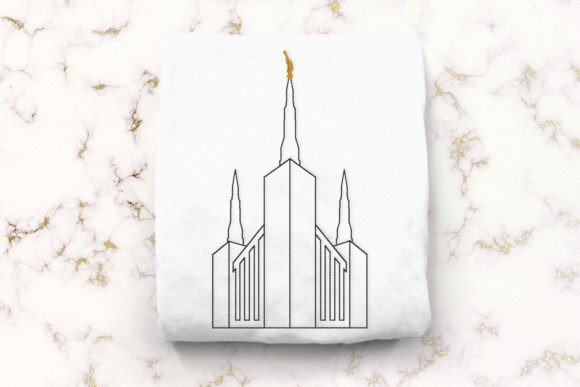
LDS Portland Oregon Temple Linework
A Quiet, Reverent Shape That Stitches With Purpose
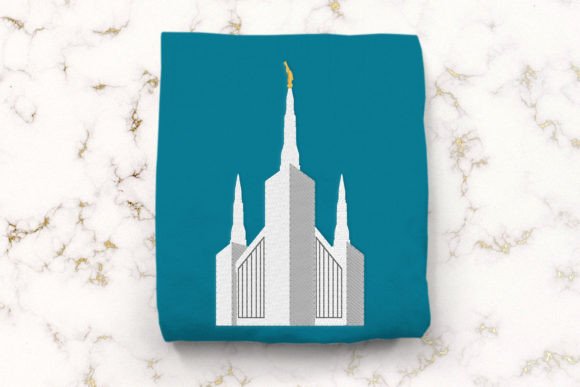
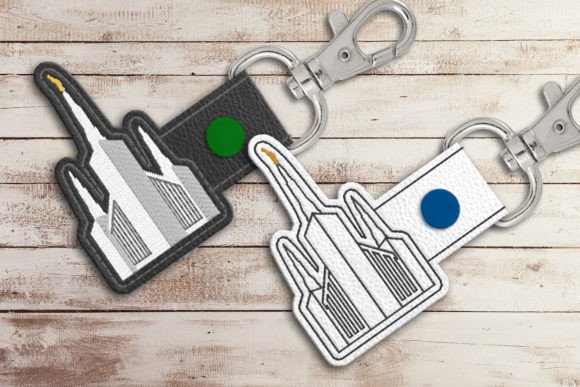
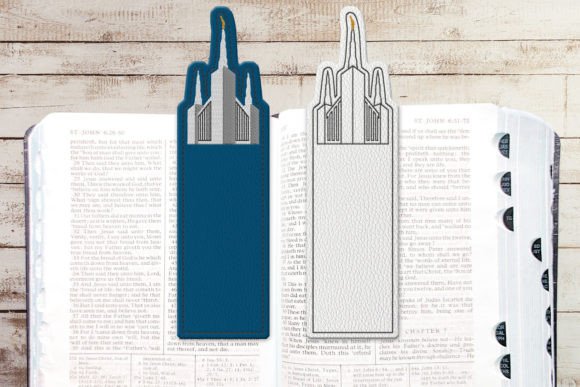
When I first opened LDS Portland Oregon Temple Linework, what struck me wasn’t flash or density—it was intention. This isn’t a busy architectural rendering or a stylized icon meant for quick recognition. It’s a clean, respectful linework interpretation of the Portland Oregon Temple, with the Moroni statue rendered in satin stitch—not as an afterthought, but as a quiet focal point. The lines are steady, not overly thin, and carry enough weight to read clearly at 3–4 inches tall—ideal for a tote bag handle, a baby blanket corner, or the chest pocket of a sweatshirt. As a designer who regularly sources embroidery files for client work and my own small shop, I immediately saw its place: not as background filler, but as a meaningful accent. It feels like something you’d choose for a personalized gift—not because it’s trendy, but because it carries resonance.
Where It Lives Best (and Why)
LDS Portland Oregon Temple Linework shines brightest on structured, medium-weight fabrics where clarity matters. I tested it on a natural linen tea towel, a heavyweight cotton canvas tote, and a midweight unbrushed fleece sweatshirt—and each time, the balance between line simplicity and satin-stitched Moroni held up. On the tote, it stitched cleanly without pull or distortion; on the sweatshirt, the satin area stayed smooth and defined thanks to light tear-away stabilizer underneath. For Etsy sellers offering custom embroidered nursery items, this design works beautifully on crib bumper alternatives or pillow covers—its clean silhouette reads well even when scaled down to 2.5 inches. Small business owners creating boutique-branded aprons or kitchen towels will find it adds quiet dignity without overwhelming the product’s function. And yes—it’s a strong choice for holiday or wedding gifts for LDS families: recognizable, reverent, and handmade in spirit.
Where to Pause and Plan Ahead
This isn’t a “stitch-and-go” file for every surface. Because the Moroni is satin-stitched, tight curves and very small sizes (under 2 inches tall) risk skipped stitches or thread nesting—especially on stretchy knits like jersey t-shirts or lightweight baby onesies. I wouldn’t recommend it for curved cap fronts without re-hooping and careful digitizing adjustments. Also, while the linework itself is forgiving, the satin area demands stable fabric support: skip the ultra-thin muslin or loosely woven gauze unless you’re using cutaway + topping. Dark fabrics require attention too—the satin Moroni needs high-contrast thread (e.g., bright gold or white on navy) to maintain legibility. And if you're layering it over textured embroidery (like a floral border), test spacing first—the clean lines can get visually lost.
Real Project Moment: A Custom Embroidered Tote for a Temple Open House
Last month, I used LDS Portland Oregon Temple Linework on a set of 12 natural canvas totes for a local ward’s temple open house outreach. We placed it centered on the bottom third of each bag, sized to 3.75 inches tall. The result? Clean, consistent, and instantly recognizable—no one mistook it for generic architecture. Attendees commented on how “calm” and “grounded” it felt compared to busier temple-themed designs. More importantly, it held up through repeated washing and daily use. That tells me something practical: this design supports longevity, not just aesthetics. It’s built for real life—not just mockups.
What It Adds to Your Handmade Product (Beyond the Obvious)
Using LDS Portland Oregon Temple Linework does more than check a thematic box. It subtly elevates perceived value: customers associate clean linework + thoughtful satin detail with care and craftsmanship—not mass production. For Etsy sellers, that translates to stronger buyer engagement and fewer “Is this hand-drawn?” questions. For craft fair vendors, it helps your booth feel cohesive and intentional—especially when paired with complementary neutral thread palettes (cream, charcoal, deep sage). And because it avoids heavy fill stitching, it reduces wear on machines and thread consumption—practical wins for commercial embroidery shops running volume orders.
Designer Notes You’ll Actually Use
- Always test on scrap fabric first—especially with your exact stabilizer combo and thread brand. Satin areas behave differently across machines.
- Check contrast in black-and-white mockups. Linework relies on shape, not color—so if it fades into the background digitally, it’ll fade in real life.
- Review stitch density before scaling. Shrinking too far compresses satin areas; enlarging too much may expose gaps in the linework.
- Confirm hoop size compatibility. This design fits comfortably in a 4x4 hoop at standard sizing—but verify before hooping a delicate garment.
- Inspect small details at 200% zoom: corners, junctions, and the Moroni’s base should be smooth—not jagged or over-digitized.
- Use proper stabilizer: light tear-away for stable wovens, cutaway for knits or high-wear items like aprons or blankets.
- Verify licensing before selling finished items or digital embroidery files—this falls under Religion Faith and Embroidery categories, which often have specific usage guidelines.
Final Thought: Design That Honors Its Subject—and Your Craft
LDS Portland Oregon Temple Linework doesn’t shout. It doesn’t try to be everything. What it does is hold space—visually and emotionally—for something meaningful. As a machine embroidery design, it respects the limits of thread and fabric. As a digital embroidery file, it gives makers room to interpret, adapt, and personalize without losing integrity. Whether you’re stitching a single baby onesie for a friend or producing 50 embroidered patches for a church event, this design supports your intent instead of competing with it. That’s rare. And that’s why it earns a permanent spot in my working library—not as decoration, but as a tool for thoughtful making.